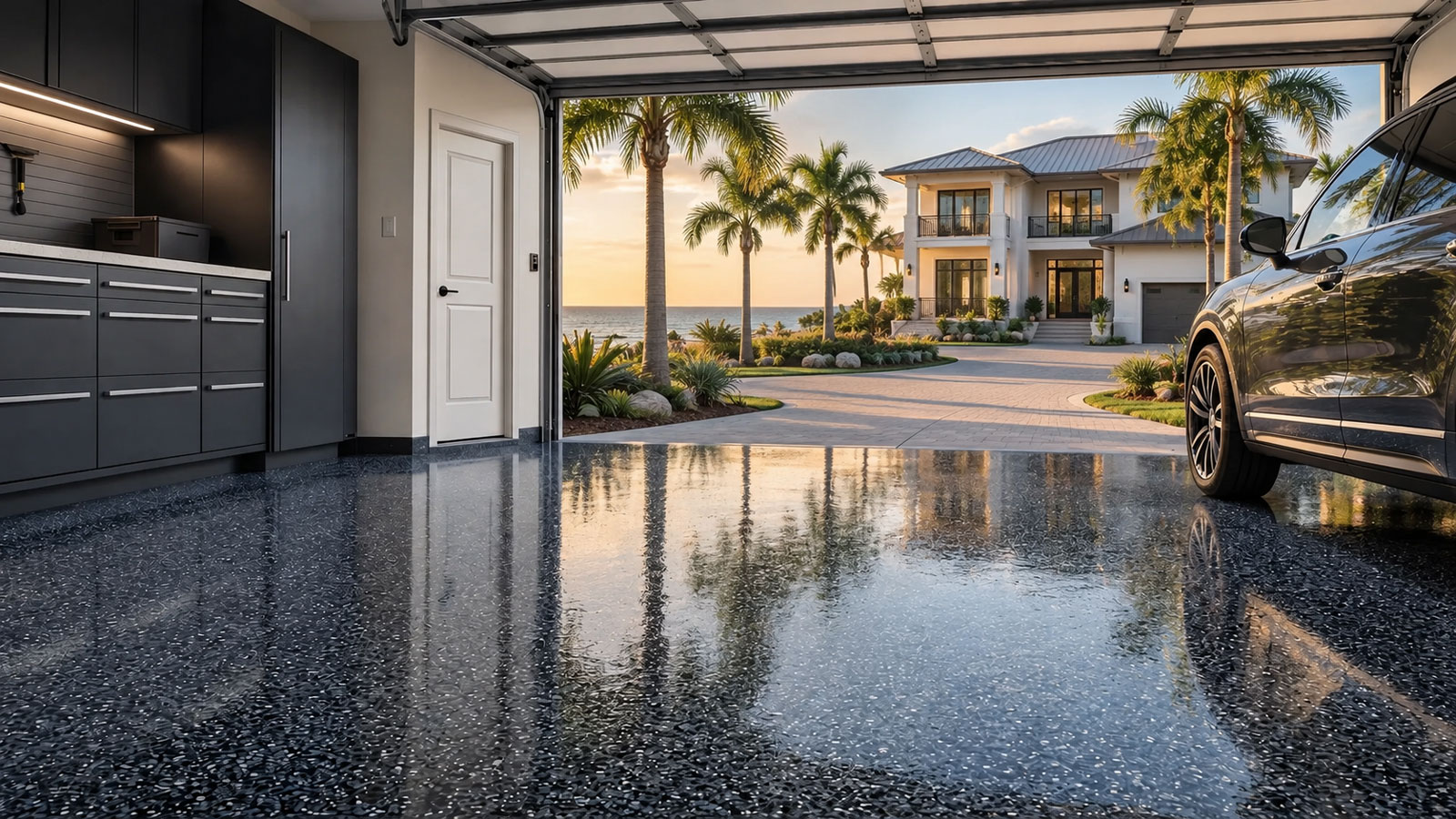
Garage Floor Coating in Pace, FL
Explore epoxy and polyaspartic coating decisions for Pace garages along the US 90 and Woodbine Road corridors.
Floor Coating Services in Pace, FL
Pace is one of the geographic areas Santa Rosa County expressly singles out for localized planning instead of treating the entire county alike. The county's 2040 comprehensive-plan program names Pace separately from Milton, the north end and Navarre Beach. Its supporting documents describe a planned six-lane US 90 widening from the Escambia County line to SR 87 South and related corridor improvements. That combination reflects ongoing development and transportation change, but it is not evidence that a specific residential garage slab is new, old or damaged.
The county's 2026 planning work also evaluates a 3.8-mile widening of Chumuckla Highway from US 90 past the Five Points intersection, including replacement of open-ditch rural drainage with an urban stormwater conveyance system. That is a distinctive local transition relevant to lot-access and runoff discussions. A homeowner should still check the actual driveway slope, downspout positions and water-entry history before a coating project.
Pace shares the Gulf Coast's long humid summer season and heavy precipitation; Pensacola airport normals report 68.31 inches of rain annually. Concrete at an open garage door can see sunlight while the rear stays shaded, and an existing floor may contain oil, sealer or old paint. Floor coating selection should start with actual substrate evaluation and preparation, not a general promise that any one coating chemistry is suitable for every Pace home.
Local Market Insight
Santa Rosa County's 2040 plan treats Pace as a distinct planning area, and the 2026 Chumuckla Highway study proposes changing portions of a rural open-ditch road to enclosed stormwater infrastructure.
What Affects the Cost of Garage Floor Coating in Pace?
A Pace garage quote should reflect the concrete surface, how the space is used and any actual driveway-water history. Infrastructure expansion around US 90 does not determine the condition of floors in nearby homes.
Written estimates should separate old coating removal, mechanical grinding, crack repairs, the complete system and curing time, with any exterior drainage work handled distinctly.
- Existing paint and sealer: A bare-looking floor can contain sealers or compounds, while an older garage may have painted or failing areas that must be removed before coating.
- Cracks and surface condition: Control joints, pitting, spalling and prior repairs should be assessed directly. Structural movement requires more than a decorative finish.
- Driveway-water observations: The Chumuckla and US 90 drainage improvements are public projects. On-site threshold, grading and gutter conditions determine whether a garage needs related assessment.
- Garage use and contaminants: Parking, home workshops and storage introduce different oils, chemicals or debris, influencing cleaning and surface preparation.
- Floor layout and edges: Steps, drains, stem walls and difficult work areas add labor beyond simple square footage. Ask what is included in the finish.
- Topcoat and return time: Texture, flake, humid summer conditions and the chosen system's curing limits change installation planning and final cost.
Call for a clear, project-specific estimate — or request one online.
US 90, Five Points and Changing Pace Development
Santa Rosa County's 2040 comprehensive-plan process expressly calls for area-specific planning in Pace as distinct from Navarre Beach and Milton. The county's supporting documentation notes planned US 90 expansion toward SR 87 and ongoing mobility improvements. These projects document growth and a changing road network, but they cannot establish whether a garage nearby has old paint or concrete cracks.
The Chumuckla Highway PD&E study covers 3.8 miles north of US 90 toward Five Points. It proposes widening from a rural two-lane roadway to a divided four-lane urban road and transitioning away from the current open-ditch and cross-drainage system toward enclosed stormwater conveyance. Those land-use and drainage changes form a recognizable Pace corridor, not a statement about private slab moisture.
A home's actual garage may have been used for vehicles, storage, tools or hobbies. Ask how the surface was previously treated, whether cracks or stains recur, and whether old paint peels under tires. The appropriate amount of grinding, cleaning and repair depends on inspection rather than assumptions about the age of nearby infrastructure.
A useful estimate details preparation, repair, finish layers, edging and the time vehicles must remain elsewhere. Photographs of old finishes and any wet areas can help the installer plan without guessing about the property's history.
Pace Rainfall, Driveway Drainage and Garage Maintenance
The western Panhandle has substantial summer rainfall. Pensacola Regional Airport's 1991–2020 normals report 68.31 inches annually, with July normally receiving 7.89 inches. Pace's local experience will vary by storm and lot, so those figures support asking about stormwater at the entry rather than asserting that a garage suffers water intrusion.
Where a driveway slopes toward a garage, examine downspouts, low spots, thresholds and recorded wetting. A roadside ditch or new road-drainage plan does not tell an installer what happens inside a particular home. If runoff enters the garage, address it before relying on a coating; a finished floor cannot redirect external water.
Humid summer conditions and a sun-warmed strip at an open garage door can affect coating application and cure. The installer should check the chosen product's temperature and moisture requirements, including the allowable interval before vehicles can park. A generic fast-cure promise is inadequate when conditions do not support it.
For a garage used as a workshop or daily parking area, cleaning and traction matter as much as appearance. Decorative-flake texture may help footing when water or sand is tracked inside, but more texture also changes scrubbing effort. A coated surface still requires regular removal of grit and vehicle fluids.
Ask each contractor to explain preparation, surface profile, repairs, coating layers and the schedule for foot traffic and tire contact. Those details make competing estimates comparable while avoiding unverified assertions about the property.
Frequently Asked Questions
Does the Pace road-widening work affect my garage slab?
Not automatically. The county's US 90 and Chumuckla Highway plans concern public transport and drainage. Your garage's actual concrete condition and runoff require separate inspection.
Will epoxy stop rainwater coming off my driveway?
No. If runoff enters the building, grading, gutters or threshold work may need correction independently of the floor coating.
Is a newer Pace home ready for coating without grinding?
Not necessarily. A new-looking floor can have sealer or finishing residue that prevents proper adhesion. Follow the complete coating system's surface-preparation requirements.
Should I choose a flake finish in a humid climate?
Decorative flake may provide a useful appearance and traction option, but humidity alone does not dictate the finish. Consider garage use, wet shoes, cleaning and installation conditions.
What should my Pace bid spell out?
Request coating removal, grinding, repair, finish layers, edge work, traction choices and a reliable return-to-use timeline. Discuss observed drainage issues separately.
Pace Neighborhoods & Local Context
Phone Quote Line
Speak with a floor coating specialist about your project and get a realistic estimate range.
(850) 789-7227Typical Project Cost
$3,000-$5,500
Typical planning range for a two-car garage. Final pricing depends on floor size, concrete condition, prep work, coating type, and finish options.
Helpful Guides